
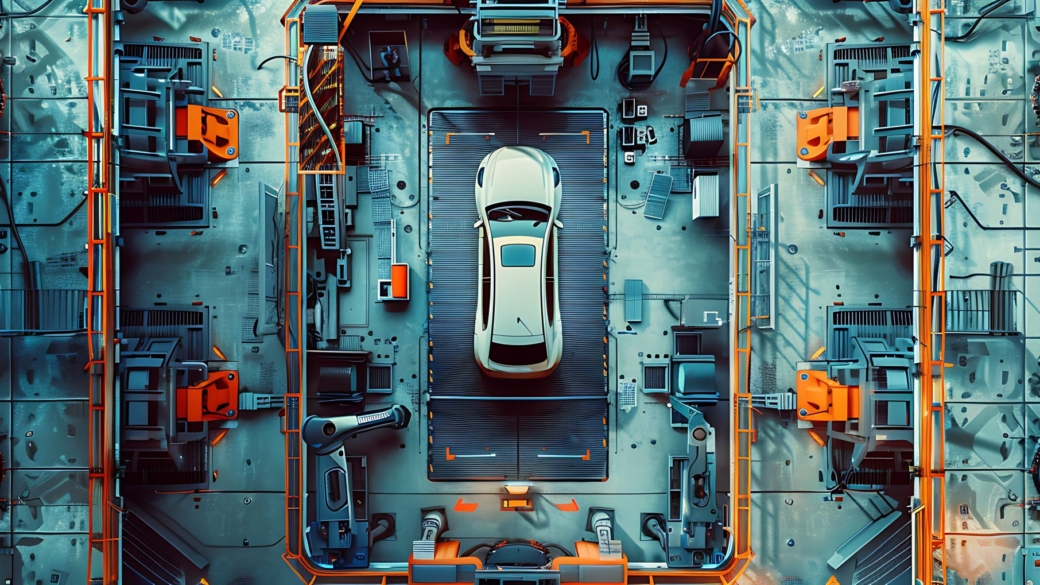
A finished automobile gives little indication of how many individual processes are required to create it.
Before a vehicle reaches the road, raw materials are transformed into structural components, body panels, glass, wiring, mechanical assemblies, interior parts, and thousands of smaller pieces. These elements must eventually come together with remarkable precision.
Automotive manufacturing is therefore less like a single production line and more like a carefully coordinated network of specialized operations.
Every stage has its own purpose, equipment, quality checks, and timing.
The Process Begins With Materials
Vehicle production starts long before the first body panel reaches an assembly station.
Steel, aluminum, plastics, glass, rubber, electronic components, fabrics, and other materials are prepared according to precise specifications.
Different materials serve different purposes.
Metals may provide structural strength, while lighter materials can help reduce mass. Plastics can be molded into complex shapes, and specialized glass can provide strength and visibility while supporting additional functions.
The selection and preparation of these materials influence everything that follows.
Stamping Gives Metal Its Shape
Large sheets of metal are transformed into recognizable body components through stamping.
Powerful presses use carefully engineered dies to form panels into shapes such as doors, hoods, roofs, and structural sections.
The process has to be extremely consistent. Small variations can affect how panels fit together later in production.
Modern stamping equipment can perform several operations on the same component, gradually producing increasingly complex shapes.
The finished panels then move toward body construction.
The Body Shop Creates the Structure
In the body shop, individual panels and structural components are joined together.
Robotic equipment is widely used for repetitive welding operations because it can perform precise movements at consistent locations.
Hundreds or even thousands of joining points may be required across a vehicle structure.
At this stage, accuracy is particularly important.
The body must maintain the correct dimensions so that doors, windows, suspension components, interior parts, and other systems can later be installed without unnecessary adjustment.
Robots and Humans Work Alongside Each Other
Automation has become an important part of automotive production, but factories are not simply collections of machines.
Robots are particularly useful for repetitive, physically demanding, or highly precise tasks. Human workers continue to perform operations requiring judgment, inspection, flexibility, and problem-solving.
Modern production environments therefore combine automated systems with skilled human oversight.
Sensors and computer-controlled equipment can monitor processes continuously, while workers verify results and respond when something falls outside expected parameters.
This combination allows factories to maintain consistency while remaining adaptable.
Surface Preparation Comes Before Paint
Once the body structure is complete, it must be prepared for painting.
The surface is cleaned and treated before multiple protective and finishing layers are applied.
These layers serve more than an aesthetic purpose.
Corrosion protection is essential because the body is exposed to moisture, road contaminants, temperature changes, and other environmental conditions throughout its life.
The final exterior layer provides the visible finish, but beneath it is a carefully engineered sequence of coatings designed to protect the underlying structure.
Paint Requires Controlled Conditions
Paint application takes place in highly controlled environments.
Temperature, humidity, cleanliness, airflow, and application equipment all influence the final result.
Automated systems can apply coatings with consistent thickness and coverage across complex surfaces.
After application, the body passes through controlled curing processes that allow the coatings to develop their required properties.
Quality-control equipment then checks the surface for imperfections that may not be obvious from a quick visual inspection.
The Powertrain Comes Together Separately
While the body is being prepared, major mechanical assemblies are often constructed in separate areas.
Combustion engines consist of numerous precision components, including pistons, crankshafts, valves, bearings, and cooling systems.
Electric powertrains use a different architecture, with electric motors, inverters, battery systems, thermal-management components, and associated electronics.
Regardless of powertrain type, manufacturing requires tight tolerances because small deviations can influence performance, durability, noise, and efficiency.
Major assemblies are tested before being installed into the vehicle.
The Chassis Receives Its Mechanical Systems
The chassis assembly brings together components that connect the vehicle to the road.
Suspension systems, steering components, brakes, wheels, axles, and related equipment are installed in carefully defined stages.
Each component has a specific position and mounting requirement.
Automated fastening equipment can apply controlled torque to critical connections, while digital systems can record whether the required specification has been achieved.
This creates a production record that can be used for quality verification.
The Interior Is Built From Hundreds of Parts
The cabin may appear simple once completed, but its construction involves a large number of individual components.
Seats, carpets, dashboards, door panels, displays, controls, speakers, wiring, climate systems, airbags, storage compartments, and trim pieces all need to fit together.
Much of this work requires careful routing of wiring and connectors.
A modern vehicle contains extensive electrical infrastructure, meaning that interior assembly is increasingly connected to electronic system installation.
Wiring Forms the Vehicle’s Nervous System
Electrical wiring is one of the most complex elements of vehicle production.
Harnesses can contain large numbers of individual wires and connectors that must reach specific components.
They are routed through the body according to carefully designed paths.
Incorrect placement can create problems ranging from difficult assembly to electrical faults.
Because of this complexity, wiring harnesses are often prepared in dedicated operations before being installed into the main vehicle structure.
The Moment of Integration
One of the most recognizable stages of automotive production occurs when the major body and mechanical assemblies come together.
Often called the marriage process, this stage connects the completed body with the powertrain and chassis.
From this point onward, the vehicle begins to resemble the finished product.
Interior components, wheels, glass, exterior trim, lighting, fluids, and other systems are then added through successive assembly stations.
The order of these operations is carefully planned to prevent one installation from interfering with another.
Software Joins the Physical Assembly
A finished vehicle is no longer purely mechanical.
Electronic control units must be configured, software must be installed, and communication between different systems must be verified.
Depending on the vehicle, this can involve the powertrain, braking systems, lighting, climate controls, displays, cameras, sensors, and other electronic functions.
Diagnostic equipment checks whether the vehicle’s electronic systems communicate correctly.
This means manufacturing now includes both physical assembly and digital configuration.
Quality Control Happens Throughout Production
Quality inspection is not limited to the final station.
Measurements, camera systems, sensors, torque monitoring, functional tests, and human inspections can occur throughout the production process.
If an issue is discovered, the goal is to identify where it originated rather than simply correcting the final symptom.
Manufacturing data can help identify patterns and determine whether a process needs adjustment.
Continuous monitoring therefore plays an important role in maintaining consistency across large production volumes.
The Finished Vehicle Faces Testing
Before leaving the factory, the completed vehicle undergoes a series of checks.
Doors and windows are tested for correct operation. Lighting systems are inspected. Electronic functions are evaluated. Brakes and steering are checked.
Vehicles may also pass through water-testing areas designed to identify potential leaks.
Some production facilities use rolling test equipment or dedicated test tracks to verify basic vehicle operation.
The exact procedures vary according to the vehicle and manufacturer, but the principle is consistent: the finished automobile must be evaluated as a complete system.
Production Is a Coordination Challenge
Building a vehicle requires thousands of individual operations to occur in the correct sequence.
A delay in one area can affect another. A missing component can interrupt an assembly station. A quality issue can require additional inspection or process adjustments.
This makes logistics as important as machinery.
Parts must arrive at the correct location, at the correct time, and in the correct configuration.
Factories therefore rely on detailed scheduling, inventory systems, automated transport equipment, and carefully organized workflows.
Manufacturing Continues to Evolve
Automotive factories are becoming increasingly connected and data-driven.
Sensors can monitor equipment performance, digital systems can track components, and automated machines can adjust processes based on production requirements.
Predictive maintenance can also help identify equipment conditions before a failure interrupts production.
At the same time, factories are adapting to different vehicle architectures, including electric and hybrid models.
This requires new production equipment, battery-handling procedures, electrical safety processes, and different approaches to powertrain assembly.
From Thousands of Parts to One Machine
The completed vehicle is the result of an extraordinary coordination effort.
Materials are formed into components. Components become assemblies. Assemblies are integrated into a structure. Electronic systems are configured, mechanical systems are tested, and the finished automobile undergoes final inspection.
What appears to be one object from the outside is actually the product of a long chain of specialized processes.
Automotive manufacturing demonstrates how engineering, logistics, automation, skilled labor, software, and quality control can operate as one interconnected system.
The vehicle eventually leaving the factory may look finished and simple. Behind that finished appearance is a carefully synchronized process involving countless decisions, measurements, movements, and inspections.