
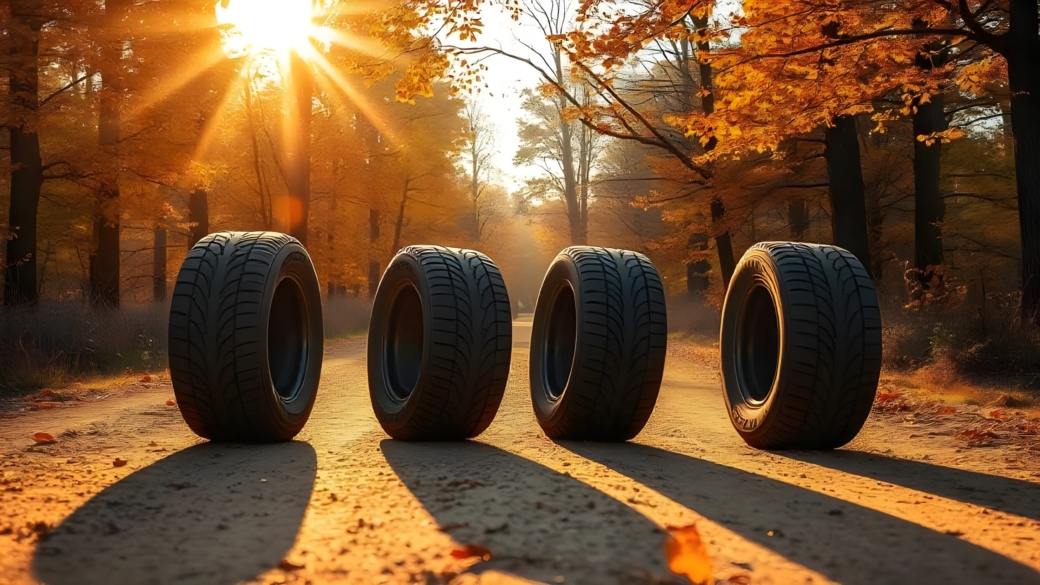
Four tires are the only components of a vehicle that directly touch the road. Each contact patch is relatively small, yet those four areas are responsible for transmitting acceleration, braking forces, steering inputs, and much of the vehicle’s interaction with the pavement.
Tires also influence ride comfort, road noise, fuel consumption, handling, and stability.
Despite their importance, tires are often treated as simple maintenance items. In reality, they are highly engineered components designed to perform across a wide range of temperatures, surfaces, loads, and driving conditions.
Understanding what happens beneath the vehicle begins with understanding these four contact patches.
A Tire Is a Carefully Engineered Structure
A tire may appear to be a single piece of rubber, but its construction is considerably more complex.
Inside the outer tread are multiple layers that can include steel belts, textile reinforcement, inner liners, and other structural materials. Each layer contributes to the tire’s strength, flexibility, durability, or ability to maintain its shape.
The tread itself contains grooves, blocks, ribs, and channels.
These features determine how the tire interacts with different road surfaces. Grooves help move water away from the contact area, while tread blocks contribute to traction and braking behavior.
The sidewall performs another important role by supporting the vehicle’s weight and allowing controlled deformation as the tire moves over uneven surfaces.
The Contact Patch Is Constantly Changing
The area touching the road is not perfectly fixed.
As the tire rotates, different sections of its tread enter and leave the contact patch. Acceleration, braking, cornering, tire pressure, vehicle weight, and road conditions can all alter the shape and distribution of that contact area.
During hard braking, for example, forces shift toward the front axle. During acceleration, some of the load moves toward the rear.
Cornering creates additional changes as lateral forces act through the tires.
This means that tire behavior is dynamic even when the vehicle appears to be traveling smoothly.
Rubber Compounds Behave Differently at Different Temperatures
The rubber used in a tire is carefully formulated for a particular operating range.
Temperature affects flexibility, grip, and wear characteristics.
A compound designed for warmer conditions may behave differently when temperatures become very low. Cold-weather tire compounds are formulated to retain greater flexibility in lower temperatures, helping them interact with the road more effectively.
This is one reason tire selection should consider the climate and typical driving environment rather than relying only on size.
The same tire can also behave differently as it heats up during extended driving.
Tread Design Controls Water Management
One of the most important jobs performed by a tread pattern is moving water away from the contact area.
When a road is wet, the grooves provide channels through which water can escape.
The design of those channels, their depth, and their arrangement all influence wet-road performance.
As tread depth decreases through normal wear, the tire gradually has less physical material available to move water.
This is why tread condition matters beyond appearance. The geometry of the tread directly affects the tire’s ability to interact with a wet surface.
Tire Pressure Changes the Contact Area
Pressure determines part of the tire’s shape and affects how it sits on the road.
If pressure is too low, the tire can deform excessively. This may increase heat generation, alter handling, and accelerate certain types of wear.
Excessive pressure can also change the shape of the contact patch and influence ride comfort and traction.
Neither extreme is desirable.
The appropriate pressure is determined by the vehicle manufacturer rather than by the maximum pressure printed on the tire sidewall. Regular checks are useful because pressure naturally changes with temperature and can gradually decrease over time.
Sidewalls Have Their Own Job
The sidewall connects the tread to the wheel while allowing the tire to flex.
Its height can influence ride quality and steering response.
A taller sidewall generally provides more material to absorb small impacts and road irregularities. A shorter sidewall can produce a more immediate steering response while transmitting more of the road’s characteristics to the suspension.
The sidewall also contains important markings that identify tire dimensions, construction, load capability, and speed capability.
These numbers and letters are not decorative. They describe specific characteristics of the tire.
Load Capacity Affects More Than Weight
Every tire has a defined load capacity.
When a vehicle is carrying passengers, luggage, or equipment, the total weight is distributed among the four tires.
Exceeding the intended load can increase stress and heat generation within the tire.
Load capacity is particularly important for vehicles that regularly carry heavy cargo or tow equipment.
The correct tire specification therefore needs to match not only the physical wheel size but also the requirements of the vehicle.
Speed Ratings Describe Capability
Tires are also assigned speed ratings that correspond to standardized performance categories under specified testing conditions.
A speed rating does not mean a driver should travel at that speed. Instead, it indicates the tire’s tested capability under the relevant conditions.
The rating works together with other characteristics such as load capacity and construction.
Selecting replacement tires therefore involves more than finding a tire with the correct diameter and width.
Alignment Determines How the Tread Meets the Road
Wheel alignment affects the angle at which each tire meets the road.
Important alignment parameters include camber, toe, and caster.
If alignment is significantly outside the intended range, a tire may experience uneven contact with the road. This can lead to irregular tread wear and changes in steering behavior.
Uneven wear can sometimes provide clues about suspension or alignment issues.
For that reason, inspecting the tread pattern can reveal more than simply whether a tire looks worn.
Suspension and Tires Work as a Team
Tires do not operate independently of the suspension.
The tire absorbs some road movement before forces reach the suspension. Springs and dampers then manage larger movements between the wheel and vehicle body.
If one part of this system is not functioning correctly, the others can be affected.
A worn damper, for example, may allow excessive wheel movement over uneven surfaces. This can reduce consistent contact between the tire and pavement.
The quality of a vehicle’s ride and handling is therefore partly determined by the relationship between tire characteristics and suspension tuning.
Rotation Helps Manage Wear
Different wheels can experience different levels of wear.
Front tires may encounter greater steering forces and, depending on the drivetrain, different levels of acceleration or braking load.
Regular tire rotation can help distribute wear more evenly when permitted by the tire and vehicle configuration.
However, not every tire setup can be rotated in the same pattern. Directional tires, staggered wheel arrangements, and different front and rear specifications may require specific procedures.
The correct rotation pattern depends on the vehicle and tire design.
Uneven Wear Can Tell a Story
Tread wear is often an early indication that something has changed.
Wear concentrated in the center can be associated with certain pressure conditions, while wear toward the shoulders can indicate different pressure or alignment patterns.
Feathering, cupping, and irregular patches may point toward alignment, suspension, balancing, or other mechanical factors.
These patterns should not automatically be interpreted as proof of one specific problem. Several factors can create similar symptoms.
Nevertheless, the tread can serve as a useful visual record of how the tire has been interacting with the vehicle and road.
Tire Noise Comes From Several Sources
The sound generated by tires depends on tread design, road surface, speed, construction, and vehicle insulation.
As the tread blocks contact and release from the pavement, small pressure changes and vibrations are produced.
Different tread patterns can therefore produce noticeably different sounds.
Road texture matters as well. The same tire can sound quieter on one surface and louder on another.
This is one reason tire selection can influence cabin comfort even when the tire’s primary purpose remains traction.
Tire Development Is Becoming More Specialized
Manufacturers are developing tires for increasingly specific applications.
Electric vehicles can place different demands on tires because of their weight distribution, immediate motor response, and emphasis on energy efficiency.
Low rolling resistance designs can reduce the energy required to move the vehicle, while other tire types may prioritize wet grip, durability, winter performance, or high-speed stability.
There is no single tire characteristic that maximizes every desirable quality simultaneously.
Each design represents a balance between competing requirements.
The Importance of the Four Contact Patches
A vehicle’s tires may occupy only a small part of its total physical footprint, but their influence is enormous.
They determine how braking forces reach the pavement, how steering inputs become directional movement, how acceleration is transmitted, and how road imperfections are filtered before reaching the suspension.
Pressure, tread depth, temperature, alignment, load, construction, and compound all affect this relationship.
That makes tire maintenance more than a routine ownership task. It is a direct part of how a vehicle interacts with the road.
The next time a vehicle travels through rain, turns into a corner, stops at an intersection, or moves across uneven pavement, the entire experience ultimately depends on those four small contact patches working together.