
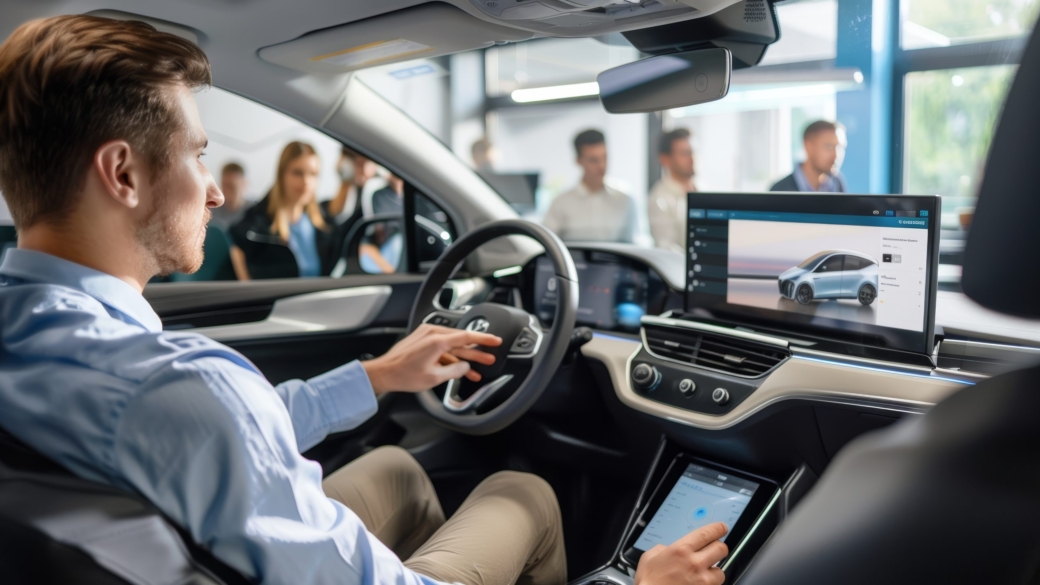
The interior of a modern vehicle is changing almost as quickly as the technology under the hood. Traditional dashboards built around physical switches and analog gauges are increasingly being replaced or supplemented by digital displays, touch interfaces, voice controls, and customizable software.
This transformation is changing the role of the cabin. Instead of serving primarily as a place to sit and operate mechanical controls, the interior is becoming an interactive environment where drivers receive information, manage vehicle functions, communicate, and personalize their experience.
The shift toward digital interiors reflects broader changes in automotive design and consumer expectations. Drivers are becoming increasingly familiar with connected devices, and many now expect similar levels of usability and functionality from the vehicles they operate.
The Dashboard Is Taking on a New Role
For decades, the dashboard followed a relatively consistent formula. A steering wheel sat in front of a cluster of gauges, while physical controls managed climate settings, audio functions, and other systems.
Digital technology has expanded the possibilities.
Modern instrument displays can show much more than speed and engine information. Depending on the vehicle, drivers may see navigation directions, energy consumption, driver-assistance status, trip data, media controls, and vehicle alerts in the same area.
This makes the dashboard more adaptable. Instead of relying on a fixed arrangement of information, manufacturers can use software to determine which details are displayed and how they are organized.
Larger Screens Are Becoming Central to the Cabin
Infotainment screens have grown substantially in recent years.
A central display can now serve as a control center for navigation, audio, phone connectivity, vehicle settings, climate functions, and other features. In some vehicles, the screen is positioned prominently within the dashboard, making it one of the most visually important elements of the cabin.
However, larger displays are not simply about increasing screen size. Their usefulness depends on how effectively information is organized.
A well-designed interface can make frequently used functions easy to locate while keeping less important information out of the driver’s immediate focus.
This has made user-interface design an increasingly important part of automotive development.
Physical Controls Are Being Reconsidered
The move toward digital interfaces has also changed the balance between physical controls and touchscreen functions.
Some manufacturers continue to use traditional buttons and switches for frequently accessed features, while others have moved more functions onto screens.
There are advantages and disadvantages to both approaches.
Physical controls can be operated through touch without requiring the driver to look away from the road. Digital interfaces, meanwhile, can accommodate numerous functions without requiring a large number of separate switches.
The direction of modern interior design is therefore not simply about removing physical controls. It is about determining which functions benefit from tactile controls and which can be handled effectively through digital interfaces.
Voice Interaction Is Becoming More Relevant
Voice technology provides another way for drivers to interact with their vehicles.
Instead of manually navigating menus, drivers can use spoken commands for selected functions. Depending on the system, voice controls can support navigation requests, phone communication, media selection, and other vehicle functions.
This approach can reduce the amount of physical interaction required while driving.
Voice interfaces are also becoming more conversational. As speech-recognition technology improves, systems can better understand natural language rather than requiring users to memorize rigid commands.
The long-term goal is to make interaction feel more natural while keeping the driver’s attention focused on driving.
Personalization Is Changing the Cabin Experience
Digital interiors also make it easier to personalize the vehicle.
Traditional vehicle settings were often adjusted manually each time a driver entered the cabin. Modern software can remember selected preferences and associate them with individual users.
Depending on the vehicle, personalization may include seating position, display layouts, climate settings, audio preferences, lighting, navigation choices, and other configurable functions.
This creates a cabin that can adapt to different drivers rather than maintaining one universal setup.
Personalization can also extend to the appearance of digital displays. Drivers may have several layouts available, allowing important information to be presented according to individual preferences.
Ambient Lighting Has Become Part of Interior Design
Lighting is another area where technology is influencing cabin design.
Modern vehicles increasingly use ambient lighting to create different visual environments within the interior. Rather than serving only a functional purpose, interior lighting can contribute to the overall character of the cabin.
LED technology allows manufacturers to use smaller lighting elements in doors, dashboards, footwells, and other areas.
Some systems can change brightness or color depending on selected settings or vehicle conditions. This gives designers another tool for shaping the atmosphere inside the vehicle.
Digital Displays Can Improve Information Management
One of the most important benefits of digital technology is the ability to organize large amounts of information.
Modern vehicles may have numerous systems operating simultaneously, including navigation, driver assistance, climate control, connectivity, vehicle monitoring, and entertainment.
Displaying everything at once would create unnecessary complexity.
Digital interfaces allow manufacturers to prioritize information and show different content depending on the situation. Navigation may become more prominent when a turn approaches, while a driver-assistance warning can receive greater visual attention when necessary.
This creates an interface that can adapt to the driver’s immediate needs.
Interior Design Is Becoming More Minimalist
Digital technology is also influencing physical design.
With fewer mechanical controls required, designers have greater freedom to create cleaner dashboards and more open cabin layouts.
This has contributed to a minimalist design trend across many modern vehicles. Screens can replace several separate control panels, while compact electronic components allow certain functions to be positioned in new ways.
The result can be a cabin with fewer visible elements and a stronger emphasis on simplicity.
However, minimalist design must still provide practical usability. A visually clean dashboard is only successful if drivers can easily understand and operate its functions.
Software Can Continue Changing the Interior
A digital cabin does not necessarily remain fixed throughout the vehicle’s life.
Software updates can introduce interface improvements, modify menus, improve system performance, and in some cases add functionality.
This creates an important distinction between modern digital vehicles and older automobiles. A traditional dashboard was largely determined when the vehicle was manufactured. A software-based interface can evolve afterward.
As automotive software becomes more advanced, the cabin may increasingly be treated as an ongoing digital platform rather than a finished product.
Screens Are Not the Only Digital Development
Although large displays receive much attention, digital interior technology extends far beyond screens.
Wireless smartphone integration, digital keys, wireless charging, advanced audio systems, voice recognition, biometric technologies, and connected services are all contributing to the transformation.
Some technologies may become almost invisible because they operate in the background.
For example, a driver may enter a vehicle and have preferred settings automatically recognized, a smartphone connected without a cable, and navigation synchronized without manually entering information.
The best digital features may therefore be the ones that reduce unnecessary interaction rather than adding more controls.
The Challenge of Balancing Technology and Simplicity
More technology does not automatically create a better interior.
Every additional feature introduces another layer of information that drivers may need to understand. Poorly organized interfaces can make basic functions more complicated than they were with traditional controls.
Automotive designers therefore face a difficult balance. They need to provide sophisticated functionality while keeping the cabin intuitive.
Clear menus, logical layouts, responsive controls, voice interaction, and thoughtfully selected physical buttons can all contribute to that balance.
The objective is not simply to put more technology into the cabin. It is to make technology easier to use.
The Future of the Digital Cabin
Vehicle interiors are likely to become even more adaptive as software and artificial intelligence develop.
Future cabins could provide increasingly personalized displays, more natural voice interaction, context-aware controls, and interfaces that adjust according to the driver’s needs.
Displays may become more flexible, while information could be projected or integrated into different areas of the cabin.
At the same time, manufacturers will need to consider how technology affects attention, comfort, privacy, and usability.
The modern vehicle interior is evolving from a collection of physical controls into a sophisticated digital environment. Screens, software, voice interfaces, personalization, and connected services are reshaping how drivers interact with their vehicles.
As this transformation continues, interior design will increasingly depend on the relationship between physical space and digital technology. The result is a new kind of cabin where functionality, information, comfort, and interaction are becoming closely connected.